Spend less time writing reports.
Reports start from the data you already collect, so your team spends the time on client work.
EPA estimates each TRI Form R takes about 36 hours, per chemical reported, including compliance checks, calculations, recordkeeping and submission.
EPA estimate, not a SHIFT7 result. Source: EPA ICR, OMB 2070-0212.
Stop typing the same data twice.
Agents move field notes and forms into your trackers, so your team gets that time back for client work.
PHMSA estimates each gas transmission and gathering annual report takes an operator about 54 hours to prepare and submit.
PHMSA estimate for that one annual report, not a SHIFT7 result. Source: PHMSA ICR, OMB 2137-0522.
Take on more clients without rebuilding.
One program, many clients, no rebuilding from scratch.
Examples of what we have built: 1173, pipeline safety programs built on the 56 contractor PSMS topics.
Built on the 56 key requirements in API's Pipeline SMS Contractor's Guide, with each topic scoped to the work your contractor actually does.
See 1173
Finish the audit with the report in hand.
Leave the site with the report, not a pile of notes.
Examples of what we have built: 119, a process safety audit with an interactive report and an owner on every action item.
See 119
Clients see where things stand without asking.
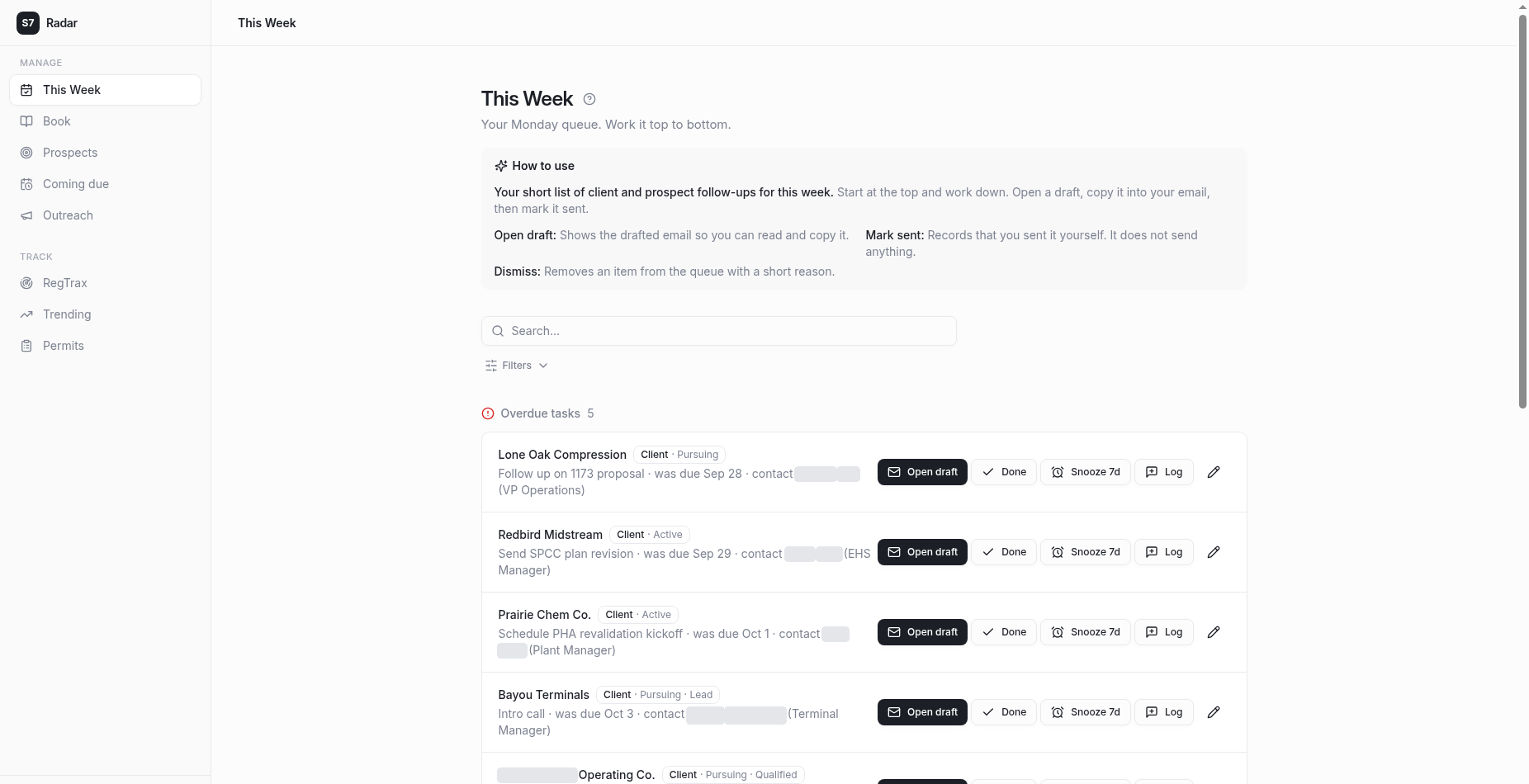
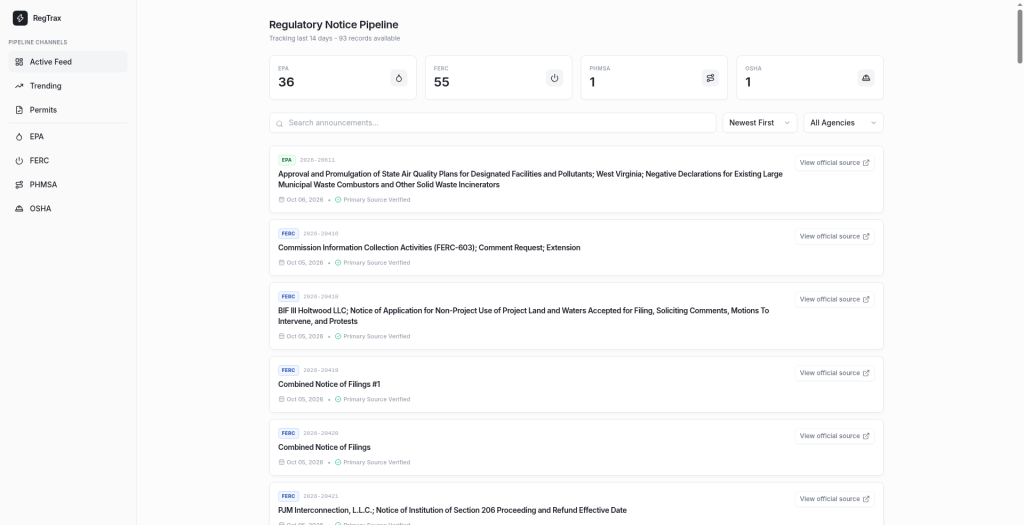
Dashboards that update themselves, instead of a spreadsheet emailed every month.
Examples of what we have built: the Oklahoma Data Center Tracker, 63 sites on one fast, live map.
See it live
We also build
Add AI to your workflows, so drafts and reviews start from your own past work.
Tie into your OneDrive or Google Drive, so your files stay where they live.
A permit and deadline register with alerts, so nothing slips.